 The bonding strength of the coating and cemented carbide coated tools alloy matrix is key carbide tool life, the coating must be suitable substrates therewith can combine to achieve the desired performance. Not the same material as each of the thermal expansion coefficients are different, probably because of the thermal stress cracks in the coating during cooling. Due to the brittle cemented carbide coated tool coating material, usually easier to crack the coating to the substrate surface extension. Gradient of substrate processing, the surface area of the coated substrate forming ductile region cubic carbides and carbonitrides, the binder content in this region is higher than the nominal binder content of the coating substrate; when the coating formed when the crack growth to the region, because of their toughness, crack propagation can absorb the energy, it is possible to effectively prevent the crack to the inside of the alloy expansion, improve the performance of cemented carbide cutting tools.
2014年12月29日星期一
Cemented Carbide Coated Tool Coated Substrate Gradient
The bonding strength of the coating and cemented carbide coated tools alloy matrix is key carbide tool life, the coating must be suitable substrates therewith can combine to achieve the desired performance. Not the same material as each of the thermal expansion coefficients are different, probably because of the thermal stress cracks in the coating during cooling. Due to the brittle cemented carbide coated tool coating material, usually easier to crack the coating to the substrate surface extension. Gradient of substrate processing, the surface area of the coated substrate forming ductile region cubic carbides and carbonitrides, the binder content in this region is higher than the nominal binder content of the coating substrate; when the coating formed when the crack growth to the region, because of their toughness, crack propagation can absorb the energy, it is possible to effectively prevent the crack to the inside of the alloy expansion, improve the performance of cemented carbide cutting tools.
Tungsten Carbide Coated Tool Flexibility of The Coating Process
 Single tungsten coated carbide coated tools can not meet the increasingly complex machining requirements, therefore, it appears coating technology portfolio diversification. "Nitriding / PVD" composite coating technology is one of them. As early as 1983 it was suggested that the plasma nitriding and ion plating process together. To improve the performance of the hard protective coating substrates by thermal chemical pretreatment technology more and more attention. The matrix nitriding and ion plating TiN composite processing, it can form a reasonable hardness gradient distribution, and also because of the role of TiN and N and further spread to internal nitrided layer deposition process, so that the transition layer hardness than a single nitrided layer is higher around 100HV0.1, so that the composite coatings have been strengthened.
2014年12月25日星期四
Cemented Carbide Coating Tool Coating Composition Diversification
 With the continuous development of technology, cell coated cemented carbide coated tools can not meet the needs of the market, does not match the substrate and the hardness, elastic modulus and thermal expansion coefficient of the coating material coated tools unit, the lattice type are not the same, resulting in residual stress between the substrate and coating, adhesion is not strong. Adding new elements in a single coating (such as adding Al, Cr and Y increase antioxidant activity, adding Zr, V, B and Hf improve wear resistance, hardness and resistance to adding Si improve chemical diffusion) prepare a diverse tool coating layer material, greatly improving the overall performance of carbide-coated tools. In the multi-carbide coated tool, the most commonly used is the TiCN, (Ti, Al) N coatings.
Preparation Cemented Carbide Coated Tool
 Preparation cemented carbide coated tool varied, its methods are vapor deposition, thermal spraying, chemical treatment, thermal reaction diffusion deposition, sol-gel. Is a method commonly used in the preparation of vapor deposition, because the preparation of the coating quality is good, has gradually become the dominant tool coating preparation methods, vapor deposition, chemical vapor deposition technology is divided into (chemicalvapordeposition, CVD) and physical vapor deposition (physicalvapordeposition, PVD). Chemical vapor deposition (CVD) deposition category belonging atom, a pioneer in the use of gaseous reactants through the atom generated solid coating, intermolecular chemical reaction pathway techniques.
Cemented Carbide Coated Tool Heat Treatment
 Heat quantity cemented carbide coated tool because it is in an arc ion plating process, the substrate temperature between 200 ~ 400 ℃, due to the lower temperature, the coating material is deposited on the substrate surface is quenched, the coating material due to the thermal expansion coefficient differences have different heat shrinkage tendency, between the coating of each grain thus generating a thermal stress. The existence of thermal stress accelerates cemented carbide coated tool failure in mechanical cutting process. The heat can absorb part of the strain energy, easing the stress relaxation, coordination of the corresponding state change. Heat-treated steel base CVD-TiN coating, the coating after 1030 ℃ 250 ℃ after quenching and tempering, TiN coating microhardness increase, the crystal structure of the coating tends to be more complete, its lattice spacing and more TiN crystal plane close to the standard value of the pitch, while the density of the coating increased, and a good combination of strength of the matrix.
Cemented Carbide Coated Tool Cold Treatment
 Cemented carbide coated tool, the composition and nature of the binder phase matrix Co tool for strength and deformation characteristics of cemented carbide coated tool plays a vital role. If you want to change the characteristics of this ingredient and alloys, has two ways, one is the heat treatment, another is the tool cold treatment. Cold treatment cemented carbide coated tool creates a ultra-low temperature environment, the degree of supercooling is increased, so that the cobalt alloy free energy difference of the phase change increases, increasing the driving force of phase transition, thereby reducing the tool in the cutting process abrasive wear and diffusion wear. Because of the higher surface hardness and wear resistance coating material, cemented coated carbide allows a higher cutting speed, thereby improving the processing efficiency; or can greatly improve tool life at the same cutting speed.
Introduction of Cemented Carbide Coated Tool
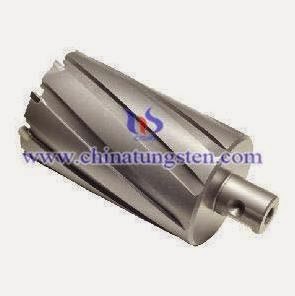
 Cemented carbide coating on the carbide cutting tool is coated substrate layer or layers of high hardness, good wear resistance of metal or non-metallic compound thin film coated tools, combined with a matrix of high strength, high toughness and Tu storey hardness, high wear resistance advantages, reduces the friction coefficient between the tool and the workpiece, to improve the wear resistance without lowering the toughness of the tool substrate. Thus, coated cemented carbide having high hardness and excellent wear resistance, extended tool life. Processing technology on tool performance coated tool after a certain influence, after cemented carbide coated tool processing techniques include heat treatment, magnetic treatment, cryogenic treatment, as technology advances, more updated type of post-processing techniques will bring Tu layer another tool change.
订阅:
博文 (Atom)